Compressed air applications in Construction
Trenchless Operations
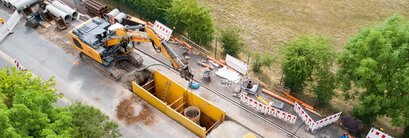
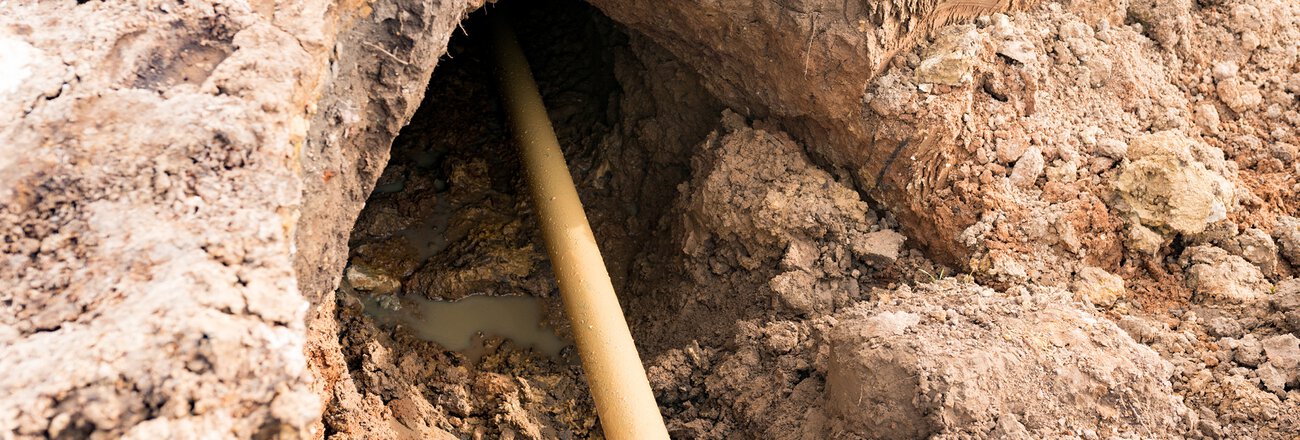
Trenchless technologies and methods have long since been favoured over traditional open excavation for the installation, repair, and replacement of underground utilities, like sewage systems, water and gas pipelines, and electrical and telecom cables. These technologies and methods require minimal excavation and therefore typically cause less disruption to roads, pavements and traffic, as well as to the availability of utilities. As a result projects which utilise trenchless technologies are usually more cost effective and can be completed faster than those using traditional methods.
Compressed air can play a key role in the operation of many trenchless technologies used in for example, sewer rehabilitation, cable blowing and impact moling. Here, cool and condensate-free compressed air is almost always recommended in order to optimise the efficiency, reliability and longevity of the associated trenchless equipment. And, depending on the specific application, in some cases high-quality compressed air will be essential. Meeting the pressure and flow requirements of the application are additionally critical factors that will impact the efficiency, performance, and suitability of a compressed air system for a specific trenchless technology application.
The most typical trenchless technologies that require compressed air include:
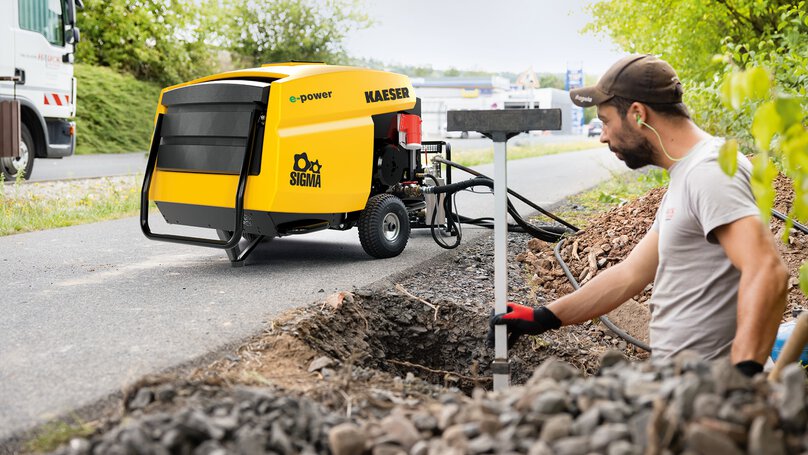
Impact moling is widely used for trenchless boring over short lengths and small diameters. The utilities and telecom industries use this method extensively to create bore paths for the installation of pipes and cables underground, without the need for extensive and disruptive excavation.
For pneumatically driven impact moling equipment, compressed air delivers the powerful percussive force that an impact mole requires in order to strike the ground repeatedly with high force to break through the soil. This impact drives the mole forward, allowing it to bore through the ground, creating a tunnel as it goes.
Impact moles such as earth rockets require a typical pressure of 6-7 bar(g). Meeting the correct pressure requirements of the impact moling equipment is critical for optimal performance and the efficient creation of a bore, as well as for safe operation.
To ensure maximum longevity of impact moling equipment, cool, condensate-free compressed air is highly recommended in order to protect the equipment from damage and wear, which can occur when moisture is present in the air.
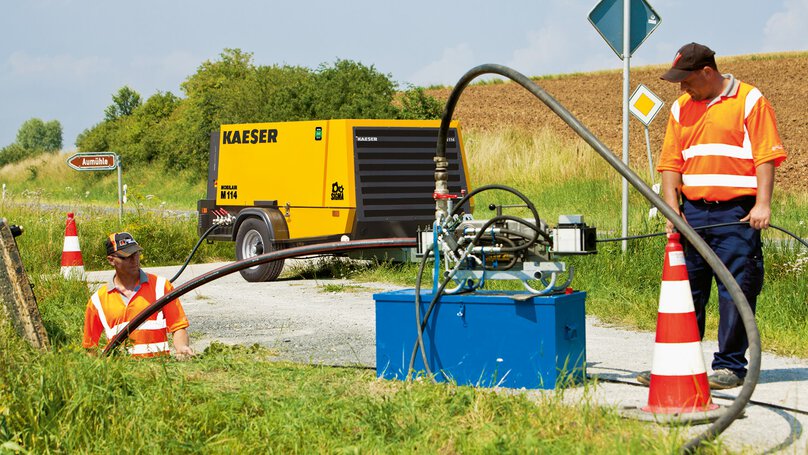
Fast, reliable, and scalable, many industries use the fibre blowing method to install fibre optic cables. This trenchless cable installation method can require compressed air in multiple ways:
Where a pneumatic belt feeder is being used, compressed air will provide the power required to initially push the optical fibres into a pre-installed duct. A fibre blowing machine then requires a portable compressor to inject high-pressure compressed air into the duct, in order to ‘blow’ - or push - the cables through the duct and into place.
Injecting compressed air causes the optical fibres to float. This significantly reduces the friction between the optical fibre and the inner walls of the duct, which increases the installation distance possible while minimising cable damage. Pneumatically powered belt feeders and fibre blowing machines both rely on cool, condensate-free compressed air to install fibre optic cables. Requiring a typical pressure of 12 to 15 bar(g), achieving the correct pressure is important. Too much pressure has the potential to damage fibre optic cables, while not enough pressure can lead to pressure drops during installation, which can result in slower installation, a reduced blowing distance, or even cable snagging.
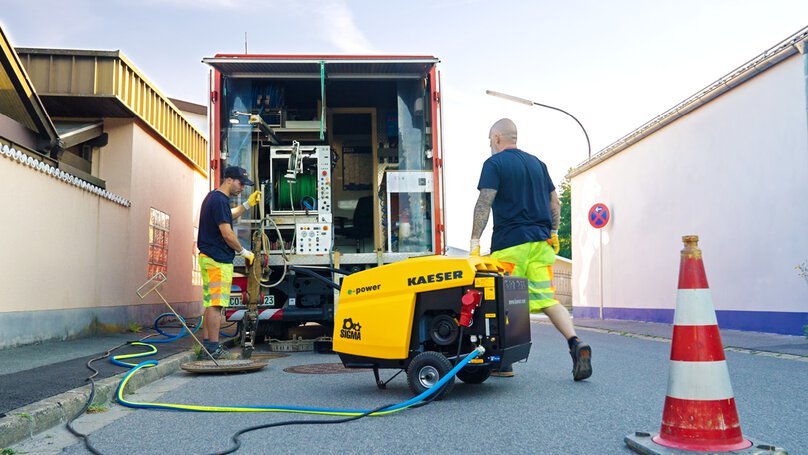
Robotic repair and rehabilitation, epoxy pipe relining, and pneumatic sealing cushions, are all typical trenchless sewer rehabilitation techniques and technologies that require a reliable and efficient supply of compressed air.
KAESER Solutions for Trenchless Operations in Construction
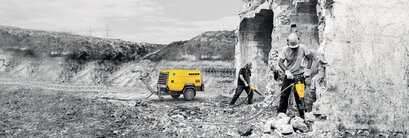
With a wide range of sizes and pressures, and an extensive array of options, KAESER portable compressors energy-efficiently meet the pressure, flow, and air quality requirements of trenchless technology.MOBILAIR portable compressors - versatile, reliable, built to last
Versatile and dependable, MOBILAIR portable compressors can be adapted to suit any trenchless technology application. Well equipped for the demands of heavy-duty and continuous operation, the range includes models powered by combustion engine or electric motor. The e-power range of electric portable compressors from KAESER, are ideal for operation in low emission and noise protection zones, or wherever an electrical power connection is available.
i.Comp 3 series - portable, oil-free compressed air
Lightweight and compact, the i.Comp 3 series of reciprocating compressors deliver a reliable supply of oil-free compressed air at all times. With constant pressure up to 11 bar (159 cfm) and flow rate up to 160 l/min, this series is more than up to the challenge of meeting the cable blowing installation requirements of both residential and office buildings.
The i.Comp 3 series is also an indispensable partner for sewer rehabilitation projects, often selected to meet the compressed air requirements of pneumatic cooling and pneumatic sealing cushion equipment. The frequency-controlled soft start makes it ideal for use on service vehicles (generator operation).
FAQs
- Airflow rate (cfm or m3/min): The compressor should meet the required airflow for the size of the cable and duct or the flow requirements of the fibre blowing machines being used during the installation.
- Pressure (psi or bar): Adequate pressure is needed to push the cable without causing jams. The pressure specification will also be determined by the min and max pressure values of the fibre blowing machines being used during the installation
- Portability: Compact and lightweight designs are preferable for field use, especially where space is restricted.
- Power source: Consider diesel, gas, or electric models depending on site conditions, as well as any specific non-road mobile exhaust emission regulations which you may need to comply with on the project site.
- Fuel consumption: Assess the fuel consumption of the portable compressor very carefully to avoid hidden costs which can have a considerable impact on the total cost of ownership over its lifetime, and your bottom line.