Compressed air applications in Construction
Geotechnical
The pre-construction stage of any major construction or infrastructure project typically involves a geotechnical investigation to assess the site’s strata. Used to inform the structural design and groundwork requirements, it often includes geotechnical drilling, where boreholes are drilled into the ground to gain direct access to subsurface soil and rock. This allows for in-situ testing, for visual logging of soil and rock types, layering, and groundwater conditions, and for the collection of samples for laboratory testing.
Two of the most typical geotechnical applications in construction that require compressed air are:
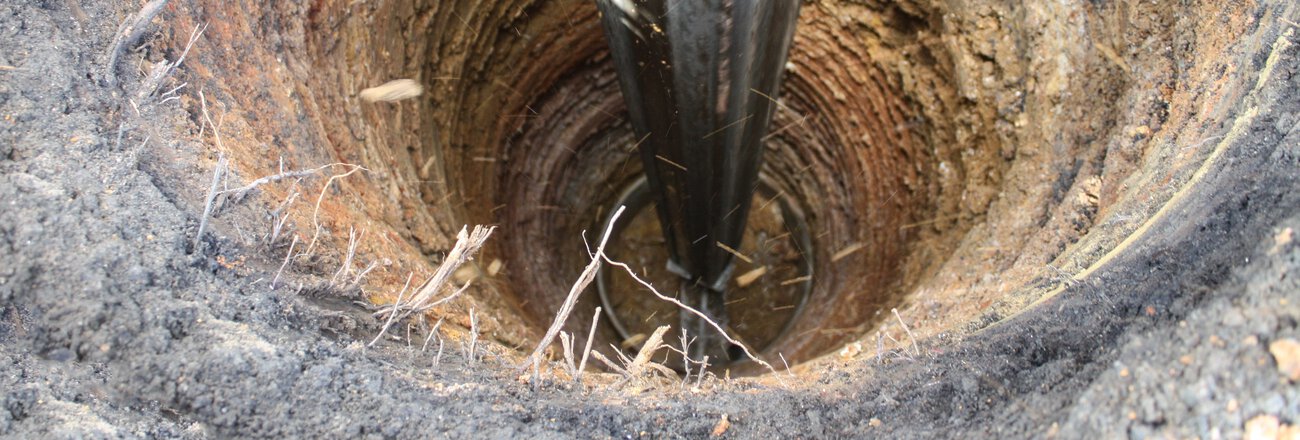
Borehole flushing is a very common and important process required for many geotechnical drilling methods. It is the process of circulating a fluid (liquid or gas) down a borehole and back up to the surface during drilling operations. This circulating fluid acts as a transport mechanism to efficiently remove the cuttings produced by the drill bit from the borehole, preventing the bit from becoming clogged and therefore facilitating uninterrupted drilling.
Air flushing is one method of borehole flushing where compressed air is the primary circulating fluid. Sometimes combined with water or polymers, it is typically used for drilling above the water table, or in hard rock formations with methods like down-the-hole (DTH) drilling and rotary air blast (RAB) drilling, where it offers faster penetration rates compared to liquid flushing.
This technique requires high-pressure compressed air. Pumped down the drill pipe, the compressed air exits at the drill bit before flowing back up through the annular space between the drill pipe and the borehole wall. The loosened cuttings produced by the drill bit are carried along with the compressed air which flows all the way back up to the surface.
Compressed air treatment is an important consideration when selecting a portable compressor for air flushing, to prevent sample contamination as well as to protect the drilling equipment from corrosion which can lead to reduced drilling efficiency. Corrosion can also damage drilling equipment leading to failure, downtime and increased maintenance costs.
The majority of DTH drills are pneumatically powered, so when the investigation calls for this drilling method, compressed air is essential in delivering percussive energy to the hammer required to break the rock.
This drilling method is capable of drilling down into very hard rock formations which other conventional drilling methods may not be capable of achieving. Geotechnical DTH drilling therefore requires high-pressure compressed air, and the compressor in this case will often serve a dual purpose of providing the power to operate the drill itself, while also supplying the compressed air required for flushing.
The air consumption and pressure requirements will depend on the specific DTH hammer, as well as the rock formation being drilled into and the size, and diameter of the hole being drilled.
A reliable supply of compressed air is essential for geotechnical drilling to ensure that the drill bit can work continuously to advance the borehole, maintaining optimum drilling conditions.
KAESER solutions for Geotechnical
Whether you require a skid-mounted stationary compressor or a mobile compressor for your geotechnical drilling rig - you’ve come to the right place! The extensive range of compact MOBILAIR portable compressors from KAESER includes stationary and mobile versions along with a multitude of available equipment and compressed air treatment options.
Rugged and dependable, MOBILAIR portable compressors are well equipped to meet the continuous operational requirements of geotechnical air flushing and DTH drilling - even in the harshest conditions. Equipped with the very latest technology, these powerful compressors are designed to deliver more compressed air with fewer emissions.
Discover your next MOBILAIR portable compressor today. Speak with our compressed air experts today! Contact us
FAQs
Using an undersized portable air compressor will lead to poor drilling performance, reduced penetration rates, potential damage to the hammer due to inefficient operation, and increased wear on the drill bit.
Oversizing will result in higher operating costs (fuel consumption). It is also inefficient as the excess capacity will not be utilised.
Dusty environments necessitate air compressors with efficient air intake filtration systems and more frequent filter maintenance to prevent damage to internal components.
High humidity can lead to condensation within the air compressor and air lines, potentially causing corrosion and affecting performance. An adequate compressed air treatment package is essential in order to manage the condensate with a very high degree of efficacy. KAESER meets these requirements for example, with its MOBILAIR System A compressed air treatment package, which includes compressed air aftercooler and centrifugal separator for cool, condensate-free compressed air.