Compressed air applications in Construction
Finishing Work
Whether it be plastering shell walls, painting surfaces, or insulating cavity walls, compressed air is often pivotal to getting many finishing jobs in the construction sector done rapidly and efficiently. From hopper guns used in plaster spraying, to conventional spray paint guns used in surface painting, precise matching of the compressed air system requirements to the pneumatic equipment is essential to ensure optimal performance, maximum efficiency, and to produce consistent, high-quality results.
Some of the most typical compressed air applications in construction finishing work projects include:
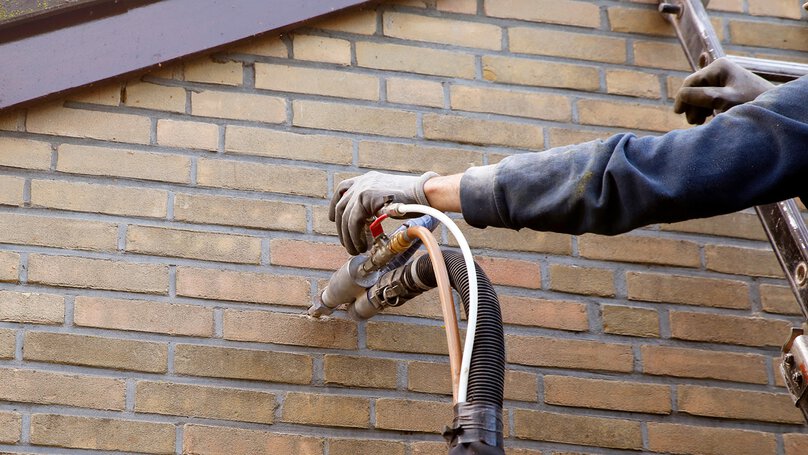
Blown-in insulation is a common method of installing insulation in cavity walls, attics and hard-to-reach areas. Compressed air is often employed when this method is used to insulate cavity walls. Here, compressed air is used to propel the insulated media - such as Expanded Polystyrene (EPS) beads - through a hose and into a small hole created in the cavity wall. The beads flow at speed throughout the cavity wall, filling it up as they go. Once settled, the beads form a cohesive mass which thermally insulates the wall.
Conversely, compressed air is also typically required to extract degraded insulation from a cavity wall. A large suction hole (or multiple holes depending on the area being extracted) are drilled into the cavity wall, along with smaller air gun hole(s). Once the initial insulation around a suction hole has been suctioned out, the air gun(s) release compressed air into the cavity wall, which loosens and pushes the remaining insulation to the suction point.
Both cavity wall insulation and cavity wall extraction require a constant supply of condensate-free compressed air, as moisture in the air can for example degrade new insulation material, reducing its effectiveness and useful life. Using a compressed air system that can consistently deliver the required volume of compressed air at the correct pressure is essential in achieving optimum insulation extraction, and optimal insulation material compaction.
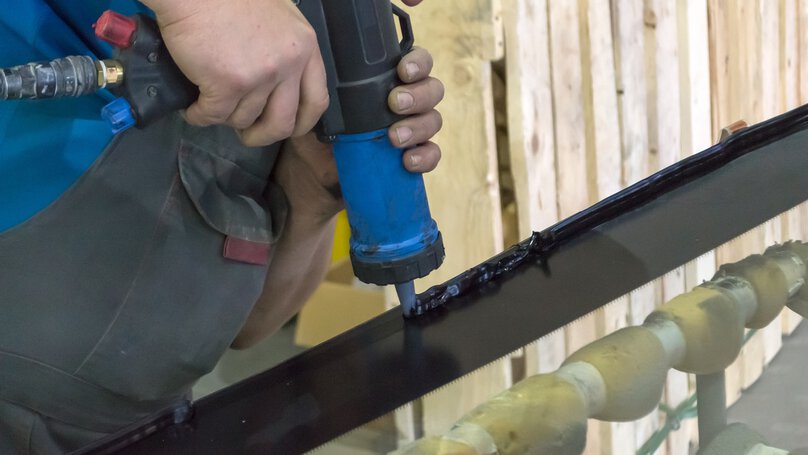
Grouting, pointing and caulking are all common construction activities, particularly in the finishing and sealing phases of both new builds and renovations. Required to fill or seal gaps and joints in a structure, these processes could be required for aesthetics - like grouting tiles on a kitchen backsplash, to ensuring functional integrity - like repointing deteriorated mortar joints on an old brick wall. When pneumatic grouting tools are used, compressed air will of course be essential. Two examples are:
Pneumatic pointing guns - these tools rely on compressed air to consistently propel the mortar or grout material through a nozzle and directly into joints between bricks, stones, or even large tiles. Favoured for speeding up the pointing process, they can deliver a more uniform finish than manual troweling, which is especially important for aesthetic work like laying decorative stone.
Pneumatic caulking guns - use compressed air to push the caulk, silicone, or other sealant from a cartridge, through a nozzle and into the desired gap or joint. They can generally produce more consistent bead work than manual caulking guns, and when used for large jobs they can reduce hand fatigue.
The air pressure and airflow requirements of a compressor being used for these applications is likely to differ depending on the size of the job and the type of grout material being used. A compressor with an adjustable pressure rate is therefore very important.
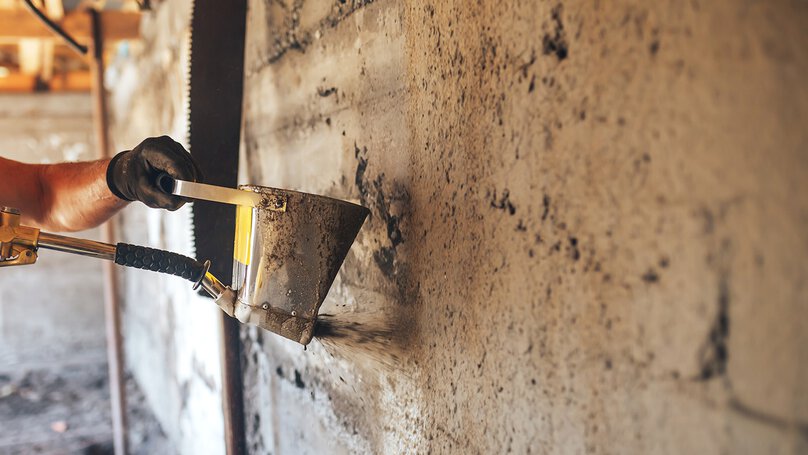
Pneumatic plaster sprayers are a popular tool used to plaster for example, shell walls. Favoured for their consistent application and speed, they are used in residential to large-scale commercial projects.
Hopper guns are a very common type of pneumatic plaster sprayer which relies on compressed air to drive plaster from a hopper, through a sprayer nozzle, and onto the surface being plastered. For optimum spraying power and consistent results, the compressed air supply needs to sufficiently meet the pressure and airflow requirements of the hopper gun.
The thickness of the plaster, the size of the applicator nozzle, as well as the length and diameter of the hose should therefore all be considered. Thicker plaster generally requires more pressure and airflow, while the size of the nozzle on the hopper gun will affect air consumption requirements, with large nozzles requiring more airflow. And, longer or narrower hoses can restrict airflow, requiring higher compressor output.
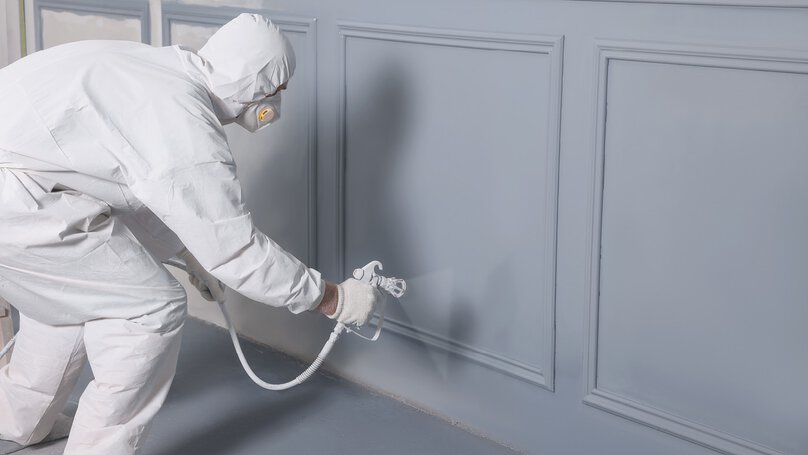
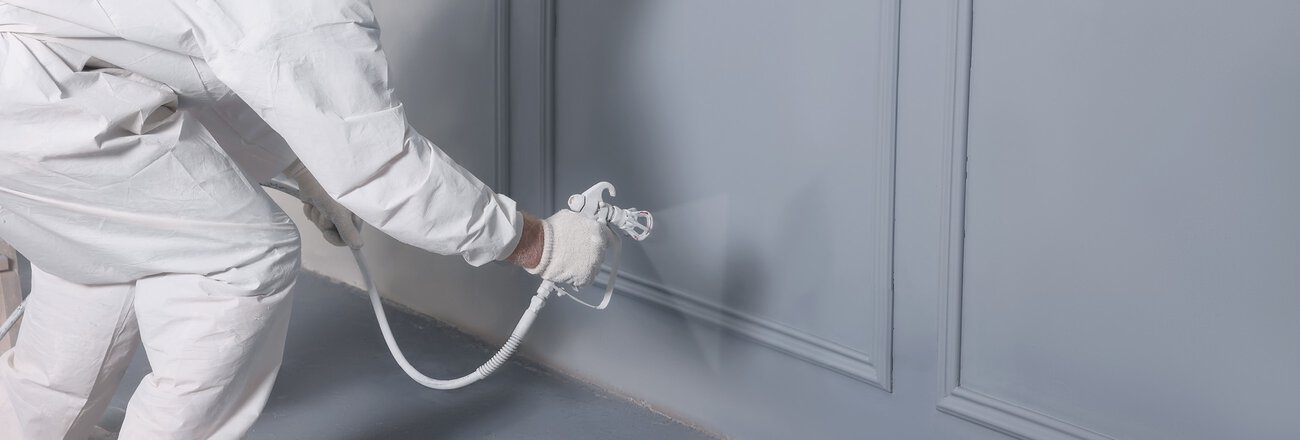
Conventional spray painting uses compressed air to atomise paint in a spray gun to a fine mist and then propel it onto a desired surface. Air spray painting offers great control and precise adjustment over paint flow and application, making it popular for complex painting tasks.
A reliable compressor that can consistently maintain the spray gun’s required air pressure and airflow is important in achieving an even finish. Fluctuations in air pressure or airflow can lead to poor atomisation and a weak spray pattern.
Clean and dry compressed air is additionally paramount for proper adhesion as well as even texture and surface finish. A compressed air supply with particles, water, or oil in it, will contaminate the paint stream. This can interfere with the paint’s bonding process as well as lead to costly paint defects such as fish eyes.
KAESER solutions for Finishing Work in Construction
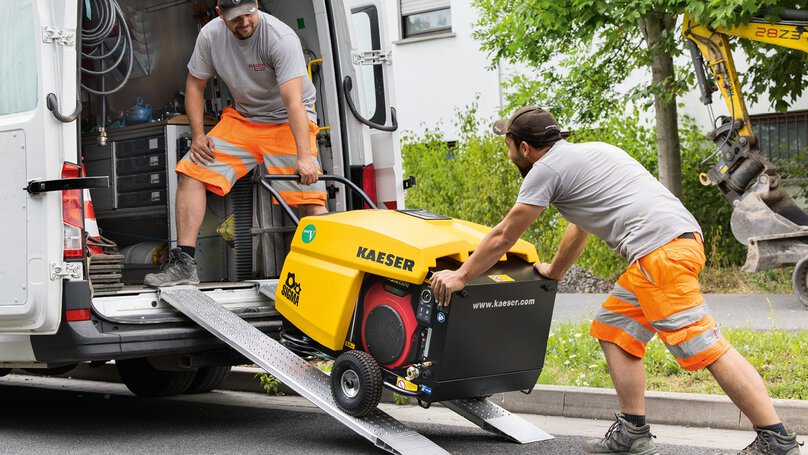
Efficient, powerful and easy to operate, KAESER’s extensive range of portable compressors are designed for continuous operation, with numerous sizes and options available to meet the requirements of finishing work applications in the construction sector.MOBILAIR M 13, M 13E portable compressors - small but mighty
Compact, lightweight and easy to manoeuvre, the MOBILAIR M 13 and M 13E portable compressors are versatile, dependable, and easy to manoeuvre, with a flow rate up to 1.6 m3/min (57 cfm), and gauge working pressure up to 15 bar (215 psi).
The M 13 with petrol engine is an excellent endurance runner. Featuring a generously sized fuel tank and continuous air delivery control, compressed air delivery can be precisely matched to meet actual compressed air demand. This contributes to the low fuel consumption of these efficient compressors.
The M 13E with electric motor truly comes into its own wherever an electrical power connection is available. Emission-free operation means it is especially well suited for use inside buildings.
Ideal for installing blown-in insulation and insulation extraction, the M 13 models can be equipped with the optional external compressed air aftercooler, for cool and condensate-free compressed air.
Portable reciprocating compressors - robust, reliable, cost-effective
From plastering to painting, there is a KAESER portable reciprocating compressor solution to meet your finishing work requirements! All KAESER portable reciprocating compressors are space-saving and lightweight for ease of manoeuvrability and transportation, designed to deliver a long, efficient and reliable service life.
The portable reciprocating compressor range includes:
- i.Comp 3 series with flow rate up to 160 l/min (5.7 cfm), pressure up to 11 bar(g) (160 psi(g)). Delivers a versatile and dependable supply of oil-free compressed air, and includes an innovative solution which evaporates the oil-free condensate with zero residue. Thanks to the speed control, an air receiver is no longer required. i.Comp 3 is perfectly suited to onsite paint application tasks, from timber elements or structural steel components, to complex paint application tasks.
- PREMIUM series with flow rate 83 to 440 l/min (2.9 to 15.5 cfm), pressure 10 to 25 bar(g) (145 to 363 psi(g)) and the CLASSIC series with flow rate 109 to 234 l/min (3.8 to 8.2 cfm), pressure 10 bar(g) (145 psi(g)), are efficient, robust and cost-effective. They are built for continuous operation on construction sites, ideal for painting and transforming large surface areas quickly. Combined with additional compressed air treatment ensures brilliant results every time.
FAQs