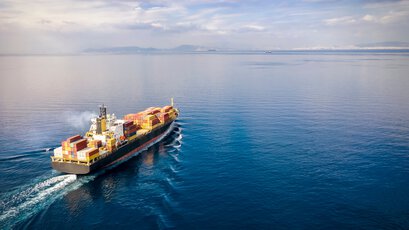
Compressed air is used extensively across the entire marine sector for applications on vessels of all classes, on offshore platforms and during port operations. Whether it be for a working air application, a control air application, or for nitrogen production to name only a few - all compressed air systems used in the marine sector must be built to perform under harsh conditions, and certified by marine classification societies to ensure safety, reliability and compliance.
Learn more about the compressed air and low-pressure air requirements of marine applications and discover how KAESER’s tailored marine solutions can optimally meet these needs!
Typical Compressed Air Applications in Marine
Marine Working Air
Working air or service air is required on board any vessel, even under the toughest of conditions, to maintain operational efficiency. Some of its applications include pneumatically driven tools, paint pumps, winches and cargo hold cleaning equipment.
A reliable supply of control air is essential for marine operations, where systems must run 24/7. From valve actuators and engine emissions monitoring systems, to throttle controls and other automation processes, control air must be free of oil, dust and water for optimal performance.
Shipboard nitrogen generation for inerting, purging, and blanketing purposes is essential on vessels with inflammable cargoes and/or dual-fuel systems, to maintain safety and efficiency. The supply of clean compressed air with a stable temperature is vital for the production of nitrogen.
Selective Catalytic Reduction (SCR) requires a reliable supply of high-quality compressed air to atomise and inject an aqueous urea or ammonia mixture into the exhaust gas before entering the catalytic converter, as well as for the periodic particulate blow-off of the catalytic converter.
Air lubrication technology uses compressed air to generate and inject small air bubbles under the hull of a ship. Forming a uniform layer, it reduces ship resistance, contributing to enhanced fuel efficiency and reduced CO2 emissions.
Crucial on ships and offshore platforms, sewage water treatment requires low-pressure air to provide the oxygen needed for aerobic biological wastewater treatment. Reliable blower operation is essential in ensuring successful treatment outcomes.
Anti-Heeling
Used to maintain vessel stability or de-icing on icebreakers, anti-heeling is crucial to the safety and efficiency of cargo operations. This process uses low-pressure air to keep the ship in its upright position by transferring water between ballast tanks, to counteract heeling forces and therefore support stable operations.
Marine Bulk Handling
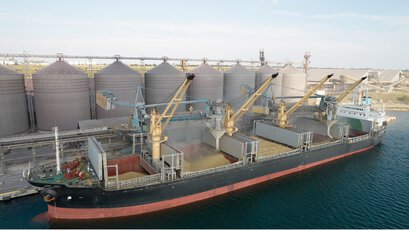
Certain bulk materials will be transported using pneumatic conveying equipment in the marine sector. In such cases, a continuous stream of compressed air will be required to effectively propel - or transport - the materials through pipelines from one point to another.
Shipboard Starting Air
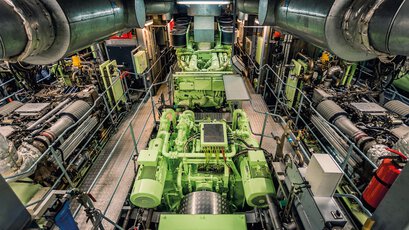
Compressed air is critical to the starting air systems required to initiate the operation of large marine diesel engines. Here, high-pressure air is used to deliver a powerful initial force that starts the engine.
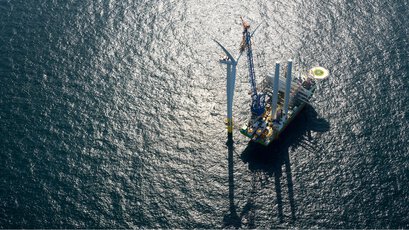
From wind farms to offshore platforms and port extensions, bubbles curtains are used to mitigate the underwater radiated noise created from activities like pile driving, drilling, and detonation. Compressed air is used to generate the air bubbles this application requires.
Do you have any questions about our products & services?