The benefits of aeration and oxygenation to aquaculture
There are a number of challenges that the aquaculture industry faces every day - from the impacts of rising sea temperatures, to algae blooms and jellyfish blooms to name only a few. Left unchecked, the impact can be detrimental. In this blog post we look at how compressed air can be used to mitigate these challenges, thereby contributing to more sustainable and environmental aquaculture practices.
When it comes to fish farming - such as farming salmon - once upon a time, you would only need a net, feed and fish to stock. But, a number of factors such as warming sea temperatures and the more frequent occurrence of algae blooms and jellyfish blooms, have created a demand for more sophisticated farming techniques.
Aquaculturists are of course well aware of the impacts that such factors can cause, from thermal stratification to eutrophic conditions to name only a few. And, unmanaged the result can be catastrophic causing mass mortalities.
As the world’s fastest growing primary industry, the question becomes how can the aquaculture industry mitigate these challenges?
Meeting the challenges of modern salmon farming
Sen Pen Aeration (SPA)
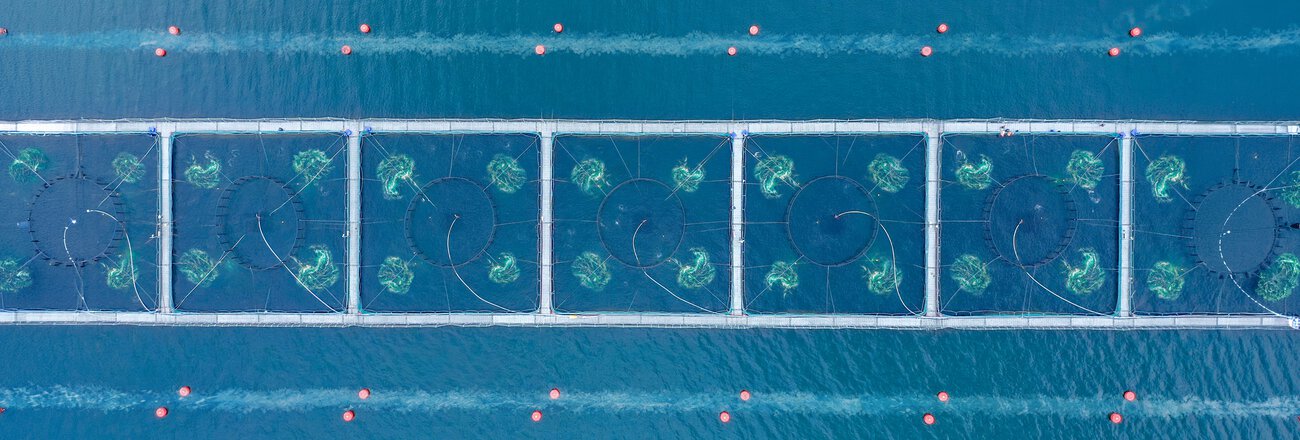
Sea pens are commonly used to farm salmon, however many farmers have yet to realise the benefits that upwelling systems - or aeration systems can garner.
Aerating sea pens in near shore aquaculture - or Sea Pen Aeration (SPA) - is a relatively new technique to the industry, although already well adopted in countries like Canada and Chile. In some regions, these setups are often referred to as ‘life support systems’, reflecting their critical role in fish health.
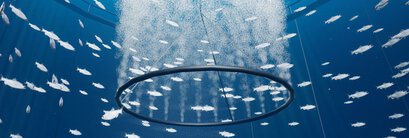
SPA is a process whereby compressed air is blown through diffusers to create bubbles within the pens. As these bubbles rise, they generate an artificial upwelling that draws water from beneath the pen to the surface, allowing the fish to benefit from its typically colder and more oxygen-rich properties. However, these water properties must be verified before applying the system, as the conditions beneath a pen are not always guaranteed to be more favourable. When implemented in the right conditions, the benefits of SPA include:
- Mitigate the impact of thermal stratification
The upwelling effect allows the SPA system to draw cooler water up from the depths and into the pens. This mitigates the impact of thermal stratification, common in static water particularly in warmer months. - Increase the oxygen content in the pens
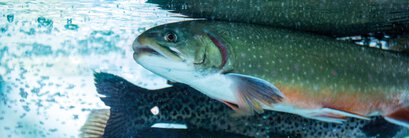
Cold water can hold more oxygen, and salmon require cold oxygenated water to thrive and survive. More oxygen also means better digestion of feed. This means less feed is required per kg of growth, lowering the feed conversion ratio (FCR) for the farmer. This brings a cost saving as less feed is required, and as the highest cost in aquaculture production, that’s a real winner! - Mitigate the harmful effects of algae and strong sea lice infections
The artificial upwelling created by SPA forces the water at the surface to flow outwards. This prevents algae and other harmful organisms occurring in the top layer of the sea from entering the sea pens. This includes the planktonic copepodite stages of sea lice, the infectious life stage that can't swim against the current. As the water is pushed out of the pen thanks to the upwelling effect, SPA can also weaken sea lice infections. - Enhanced sea lice protection
The high water circulation generated by SPA allows for the use of deeper lice skirts than standard configurations (provided hydrodynamic conditions permit). Since sea lice larvae are typically found in higher concentrations near the surface, deeper skirts create a more effective physical barrier, significantly reducing the risk of infestation. - Improve salmon quality*
The aeration process also creates a current in the water for the salmon to swim against. It is suspected* - though not yet fully proven - that this improves the quality of the final product. - Can be used with a bubble curtain for total coverage of the entire water column
Another benefit of SPA is that it can be combined with a bubble curtain. An upwelling system can only stop planktonic organisms that cannot swim against the current e.g algae, sea lice, and jellyfish. This means that only algae in the photic zone as well as sea lice in the copepodite stages will be pushed out. To protect the entire water column you would utilise a bubble curtain, and they can easily be combined with an SPA system. This is also beneficial as it is believed that a bubble curtain can shield the pen from external currents, which may restrict the entry of “new” water outside the pen from entering. But, a water exchange is necessary in order to bring new, oxygen-rich water into the pen. By combining an aeration system with a bubble curtain, you get the best of both worlds - you keep the oxygen levels up (with the aeration system) while also providing protection (with the bubble curtain).
Production Optimisation - the next frontier
Sen Pen Oxygenation (SPO)
Early adopters are now also realising the potential to use compressors in combination with a Pressure Swing Adsorption (PSA) oxygen generator to additionally oxygenate the water in order to optimise production and increase fish health. These dual purpose systems are built so that they can either create an upwelling with a compressor-fed SPA system or they can be used to boost the oxygen content of the water by injecting oxygen with a 92-93% purity with either micro or nano bubbles.
Conclusion
Pneumatic feeding using low-pressure air has already revolutionised the intensification of salmon farming as we know it today. With applications like SPA and SPO now on the rise, compressed air is set to become especially beneficial in the development of more sustainable and environmental aquaculture practices.