Compressed air applications in Water Management
Sewer Rehabilitation
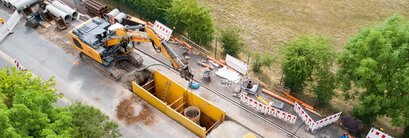
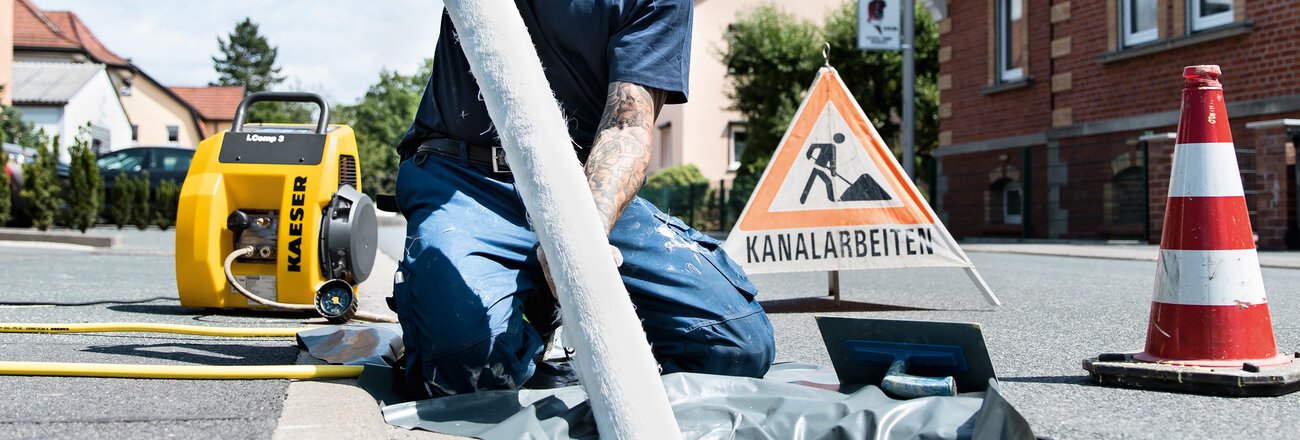
Compressed air is used extensively in trenchless sewer rehabilitation, from inflating pneumatic sealing cushions and powering tree root milling machines, to feeding and pressing inliner into position into the pipelines, as well as cooling the UV lamps used to harden the lining material.
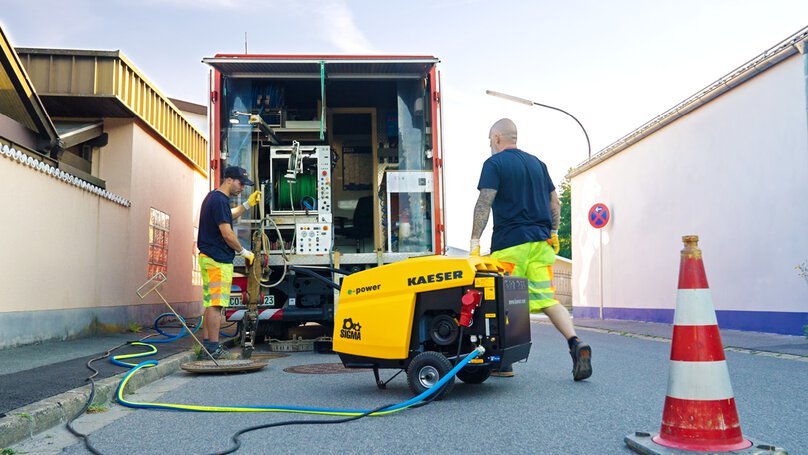
These applications require a reliable and efficient supply of compressed air, from a portable compressor that is compact and lightweight for ease of transportation and manoeuvrability. In most cases, oil-free compressed air is a prerequisite. And, depending on the location of the sewer rehabilitation work, the compressor may also need to be able to operate in strict low emission and noise protection zones.
The most typical sewer rehabilitation applications that require compressed air include:
Robotic pipeline rehabilitation and repair is an advanced civil engineering method used to restore and repair sewer system pipelines, as well as pipelines in many other market sectors such as oil and gas. State-of-the-art robotic technology is placed into pipelines equipped with cameras, sensors, and tools like pneumatic milling machines. These robots then navigate through pipes to detect leaks, cracks, and blockages, after which they are used to perform targeted repairs such as patching leaks and clearing obstructions like tree roots. This innovative method eliminates the need for extensive and disruptive excavation, delivering quicker and more cost-effective pipeline rehabilitation.
Robotic pipeline rehabilitation and repair relies heavily on a consistent supply of compressed air to facilitate the intricate operations of the robots. Maintaining cool and condensate-free compressed air is also crucial in order to optimise the efficiency, reliability, and longevity of the robotic systems. It also contributes to the effective operation of the equipment in diverse environmental conditions, without compromising performance or safety.
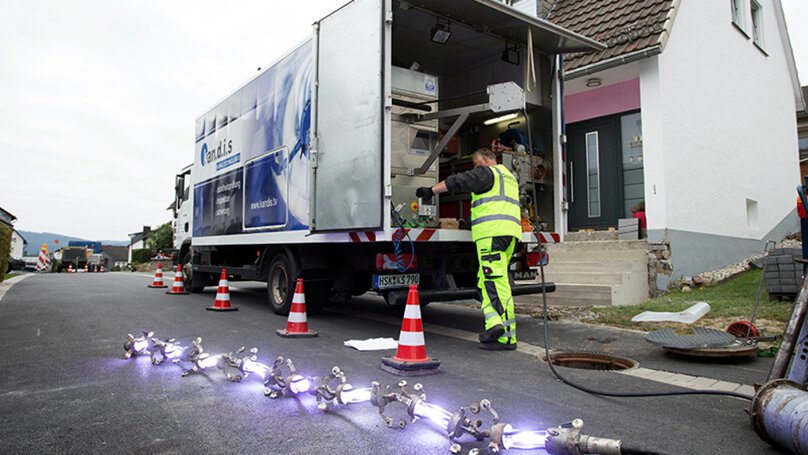
Epoxy pipe relining is a cutting-edge trenchless technology used to repair and rehabilitate ageing or damaged pipelines without the need for extensive excavation. This innovative process involves cleaning the existing pipes and then coating their interior surface with a durable epoxy resin. Compressed air is integral throughout this process, supporting both pneumatic filling and pneumatic cooling requirements. Once cured, the epoxy forms a seamless, corrosion-resistant barrier that restores the structural integrity of the pipes and extends their lifespan. Used in both residential and commercial applications, it is a cost-effective, environmentally friendly solution, that minimises disruption and downtime compared to conventional sewer rehabilitation methods.
Cool, condensate-free and technically oil-free compressed air plays an essential role in achieving reliable and long-term epoxy pipe relining performance. It enhances the quality of the epoxy coating, aids in proper adhesion, and facilitates effective curing processes. It also offers optimal moisture protection, enhancing equipment reliability and service life.
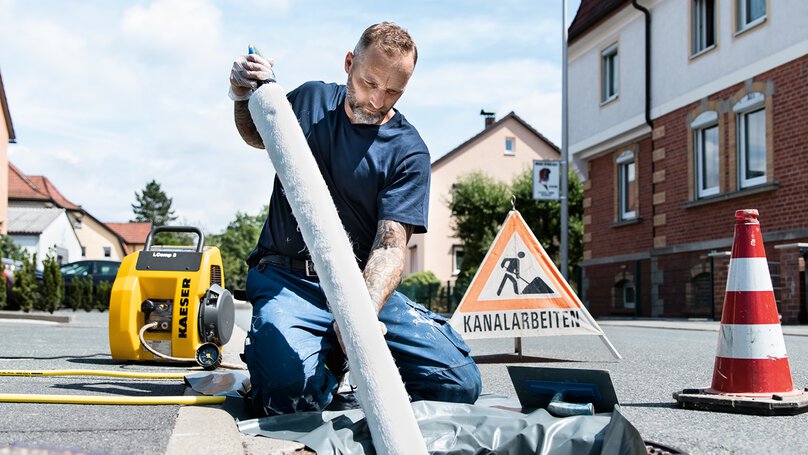
Pneumatic sealing cushions are often required in trenchless sewer rehabilitation projects. They are used to isolate specified sections of pipeline to provide a controlled environment for inspection or repair work. A deflated pneumatic sealing cushion is inserted into a pipe and guided to the required location. Compressed air is then used to inflate the cushion in order to seal off a section of pipeline, effectively blocking off the flow of water or gases. In order to maintain the seal, the compressed air supply must have the right amount of power to maintain the pressure required in the liner.
For a pneumatic sealing cushion to operate effectively and safely, a consistent supply of cool and clean compressed is crucial. The compressed air supply must be free from oil, moisture and particles to prevent cushion material degradation which could affect its ability to maintain a tight seal. The quality of the compressed air will also impact the integrity of the cushion’s inflation mechanism.
KAESER Solutions for Trenchless Sewer Rehabilitation
KAESER reliably and efficiently meets the compressed air requirements of pneumatic tools used in trenchless sewer rehabilitation with its flexible, compact, lightweight, and portable compressor range. This includes the renowned range of MOBILAIR portable screw compressors, the advanced i.Comp series of portable reciprocating compressors, along with a wide range of compressed air treatment components.
The range includes models powered by combustion engine or electric motor. The e-power series is the perfect choice for use in low emission and noise protection zones.
For expert advice on selecting the most suitable portable compressor for your trenchless sewer rehabilitation application, visit the FAQs section below or contact us today.