Compressed air applications in Construction
Concrete and Structural Work
From laying foundations and slabs for buildings, to constructing bridges and supporting structures, concrete is used extensively in the construction sector for structural work. Compressed air can be required in the placing as well as finishing stages of laying concrete, playing a key role in achieving good compaction.
For optimum results, the compressed air supply must reliably meet the pressure and airflow required of the equipment, and deliver cool and condensate-free compressed air. Depending on the application, it may also need to deliver technically oil-free air.
Two of the most common concrete and structural work applications that require compressed air are described below.
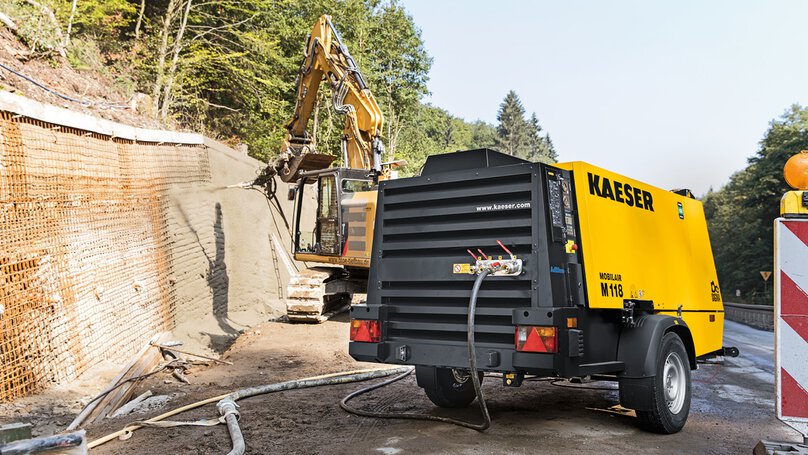
Shotcreting, also known as concrete spraying, is a popular method of laying dry- or wet- mix concrete either horizontally, vertically or overhead.
Compressed air is an integral part of the shotcreting process. Once the concrete mix is pumped through a hose, compressed air is used to pneumatically spray it onto the desired surface. The compressed air supply is responsible for the velocity at which the concrete leaves the nozzle. Achieving the correct pressure and airflow is therefore critical in realising a high shotcrete velocity required for good compaction, which ensures denser concrete that will have a good compressive strength and be less permeable.
In order to maintain the reliability of shotcreting equipment, and to achieve high-quality concrete results, a dependable supply of technically oil-free, condensate-free and cool compressed air is critical. Moisture in the compressed air can for example, lead to the hose clogging or blocking, which would impact the consistency of the spray as well as the lifespan of the equipment. And, allowing contaminated compressed air to mix with the concrete can impact the curing process and its final compressive strength.
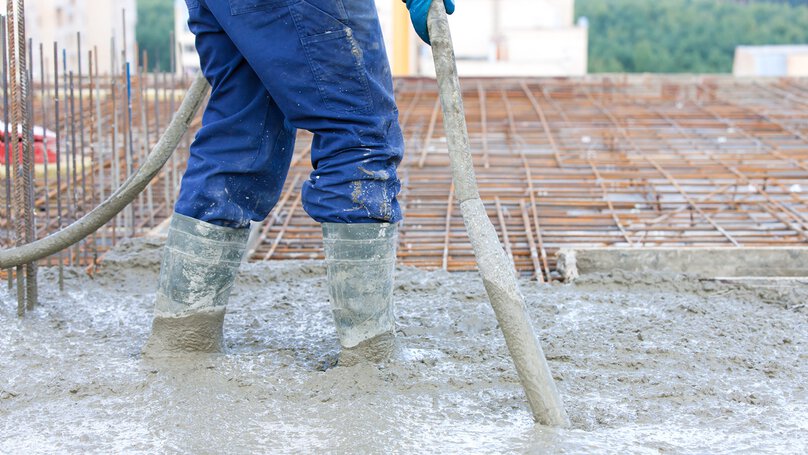
Vibrating wet concrete is an important finishing stage to placing concrete, carried out to remove air pockets and achieve correct compaction and optimal spread. Whether an internal or external pneumatic concrete vibrator is used, compressed air plays an essential role:
Internal vibrators are typically required for large-scale pours. They require compressed air to drive the vibrator mechanism back and forth at high speeds. These vibrations transfer into the vibration head which is inserted into the concrete.
External vibrators are often used for precast elements like slabs and beams, or for vibrating thin sections of concrete. Attached to the formwork or the outer surface of the concrete, they also use compressed air to drive the vibrator mechanism, which in this case is transmitted through the external surface of the concrete.
In order to maintain uniform vibrator performance, and to sustain continuous operation for the job at hand, the compressed air supply must maintain the pressure and airflow required by the concrete vibration equipment. To ensure consistent performance, and to protect associated equipment from damage caused by moisture in the compressed air supply, the compressor must deliver cool and condensate free compressed air.
KAESER Solutions for Concrete and Structural Work in Construction
MOBILAIR portable compressors from KAESER easily meet the requirements of concrete spraying and vibration applications, impressing with their exceptional power, versatility and dependability. Thanks to a multitude of available equipment options, cool, condensate-free and technically oil-free compressed air requirements can be met.
Particularly important in environmentally sensitive zones, soil contamination can also be prevented when the MOBILAIR portable compressor features a compressed air aftercooler. After the compressed air cools down in the compressed air aftercooler, the condensate drains out and is then evaporated by the hot engine exhaust gases in MOBILAIR models with combustion engine, and is collected in a built-in canister in models with electric motor.
Depending on the MOBILAIR model, the required compressed air treatment can be specified and integrated into the unit, or supplied as a compact external treatment system.
Let our compressed air experts assist you in selecting the optimum portable compressor solution to dependably meet the compressed air requirements of your shotcreting or concrete vibration equipment. Contact us today!
FAQs
The required airflow (in m3/min or cfm) depends on the vibrator’s size and number of units being used simultaneously.
As a general guideline:
- Small vibrators (25 mm diameter): 0.4 m3/min / 15 cfm
- Medium vibrators (50 mm diameter): 0.6 m3/min / 22 cfm
- Large vibrators (100 mm diameter): 2 m3/min / 70 cfm
When using multiple vibrators, add up the total m3/min (cfm) demand and ensure the compressor exceeds this requirement.
Always check the manufacturers data sheet for the exact air demand requirements before selecting the compressor.
We recommended using compressed air treatment when powering pneumatic tools. KAESER offers the air treatment system A, which comprises of an after cooler and condensate separator to meet these requirements. This air treatment package cools the air and avoids moisture building up in the lines which helps prolong the lifetime of the pneumatic tool.
It is also advisable to consider the technical guidelines and specifications in your country which may mandate the requirement for compressed air treatment for these applications. For example, in Germany the ZTV-ING regulation provides detailed standards and requirements for civil engineering projects. This includes the requirement that technically oil-free compressed air must be used for concrete refurbishment work in order to prevent rust formation on steel structures.